


WTO Dispute Victory: Indonesian Biodiesel Poised for Growth in Europe


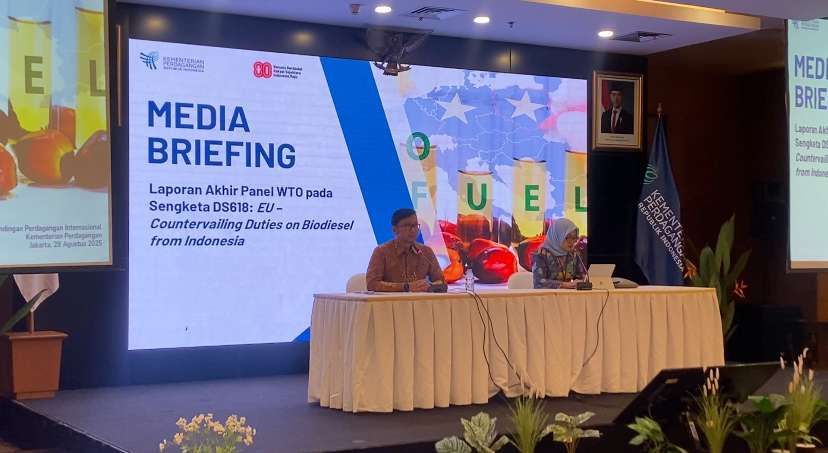
Indonesia’s victory in the World Trade Organization (WTO) dispute against the European Union’s (EU) Countervailing Duties (CVD) has opened new horizons for national biodiesel exports. The Indonesian government projects that biodiesel export growth to the EU will remain stable at 6.7%, with the potential for further increase.
Djatmiko Bris Witjaksono, Director General of International Trade Negotiations at the Ministry of Trade, expressed this optimism. “The 6.7% figure can be maintained or even grow, in line with the EU’s commitment in the IEU-CEPA, which recognizes Indonesian palm oil as a renewable energy source,” he stated. This progress in trade diplomacy provides a solid foundation for the expansion of biodiesel exports.
Key Factors for Indonesian Biodiesel Growth in Europe
The positive projection is based on several crucial factors:
-
WTO Ruling on CVD: The WTO panel ruled that the anti-subsidy duties applied by the EU were not supported by objective evidence. This decision effectively clears trade barriers and paves the way for a full recovery of Indonesian biodiesel exports to the European market.
-
Market Resilience: Despite facing the challenges of CVD and a global pandemic, Indonesian biodiesel exports to the EU demonstrated remarkable resilience. Between 2020 and 2024, exports grew consistently by 6.7% annually, with an average value of USD 319.7 million.
-
IEU-CEPA Commitments: The Indonesia-EU Comprehensive Economic Partnership Agreement (IEU-CEPA) officially grants market access for palm oil and its derivatives. Crucially, it recognizes them as renewable energy sources, providing a formal basis for increasing export volumes.
Challenges and Long-Term Strategy
While the European market is now more accessible, the Indonesian government must still navigate complex long-term strategies:
-
Balancing Domestic Demand: National biodiesel consumption is projected to reach 15.6 million kiloliters by 2045. Balancing this growing internal need with export ambitions is a priority.
-
Market Diversification: To reduce dependency on a single region, the government is actively pushing for export expansion into other countries. However, the EU remains a vital “premium” market for high-standard palm oil products.
With the WTO victory and the support of IEU-CEPA, Indonesian biodiesel now holds a significantly stronger bargaining position. This development benefits not only the industrial sector but also millions of palm oil farmers across Indonesia.