


How Indonesia Became a Palm Biodiesel Pioneer Through B40


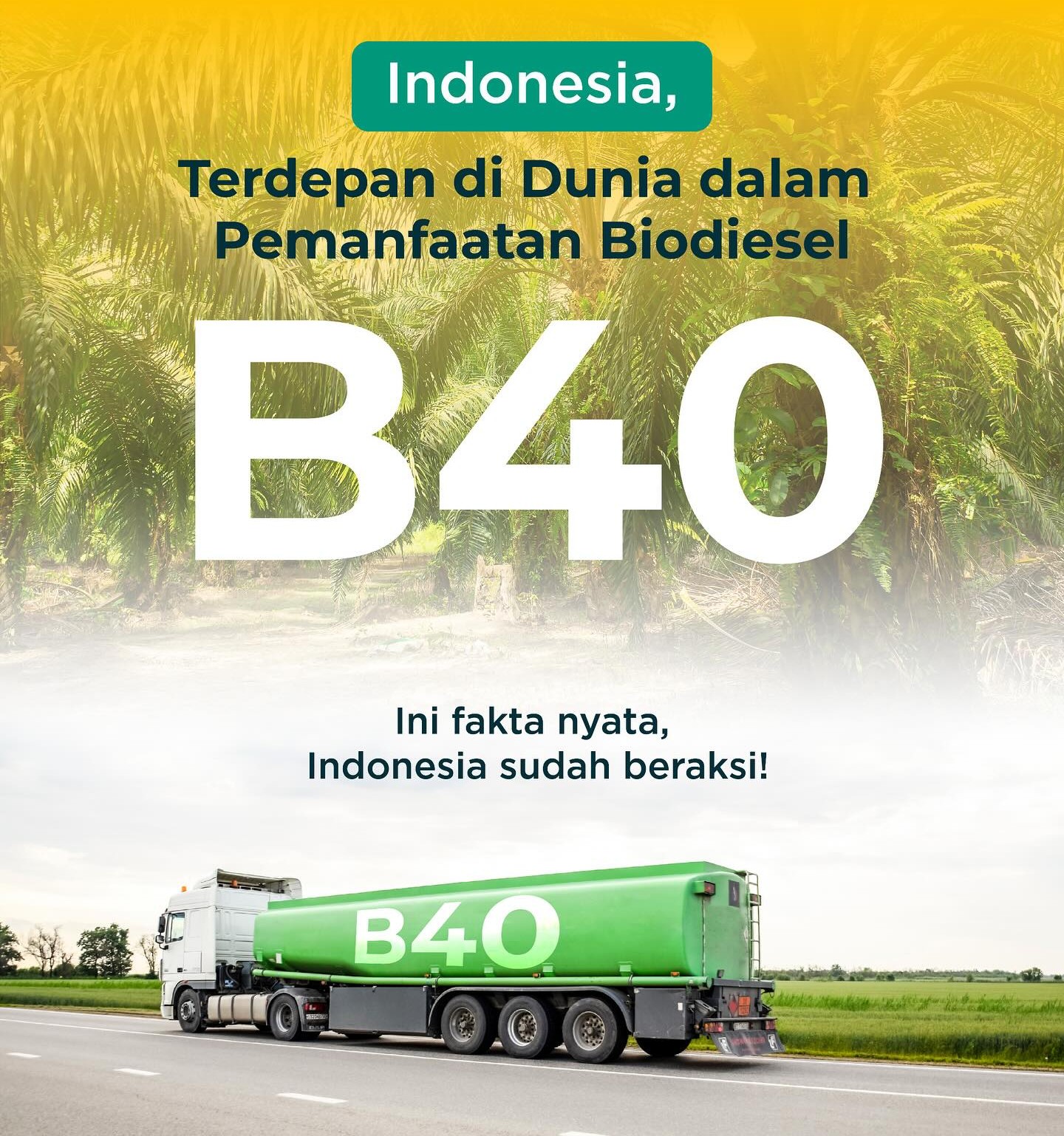
Indonesia is not just undergoing an energy transition; it is leading it. On the global stage, Indonesia has become the primary reference for nations seeking to break their dependence on fossil fuels through the development of biofuels. This was reaffirmed at the 2nd Indonesia Palm Oil Research and Innovation Conference and Expo (IPORICE) 2025, where Dr. Ir. Soni Solistia Wirawan, M.Eng—a senior researcher from the BRIN Fuel Technology Research Center—explained how deep research serves as the foundation for the nation’s biodiesel success.
Technical Advantages and Refined Characteristics
As an expert from the National Research and Innovation Agency (BRIN), Soni emphasized that palm-based biodiesel possesses significant comparative advantages. Beyond its status as a renewable energy source capable of drastically reducing carbon emissions, biodiesel has better lubricity than fossil diesel. This helps extend the life of engine components. Furthermore, its extremely low sulfur content makes it a far more environmentally friendly fuel.
However, the journey toward a perfect fuel is not instantaneous. Soni revealed that BRIN continues to conduct intensive research on several technical characteristics of biodiesel to ensure optimal performance for the general public:
-
Hygroscopic: The ability of the fuel to absorb moisture from the air, which must be controlled to prevent corrosion.
-
Oxidation Stability: Ensuring the fuel remains stable and does not easily oxidize during storage.
-
Solidification: Ensuring the biodiesel does not freeze or thicken when vehicles are in low temperatures or mountainous regions.
-
Solvency: The “detergent” property of biodiesel that cleans engine deposits, which must be monitored to ensure it does not damage incompatible seals.
B40: Tangible Proof of Global Leadership
Since 2020, Indonesia has set a new standard with the implementation of B40—a biodiesel blend level that has not been matched by any other country. This achievement has turned Indonesia into a “living laboratory” for the international community. Soni explained that the success of B40 is not just about mixing fuels, but involves a series of rigorous field tests.
BRIN routinely conducts road tests involving vehicle fleets traveling up to 500 kilometers per day. Upon reaching specific distance targets, these vehicle engines undergo a total teardown for detailed inspection. Researchers examine carbon buildup on injectors, the condition of the combustion chamber, and evaluate any premature component wear. This research transparency builds trust that biodiesel is safe for modern vehicle engines.
Three Key Factors Toward B50 and Beyond
Looking ahead toward B50, Soni highlighted three crucial factors that must move in tandem: raw material pricing, production process efficiency, and distribution effectiveness. Without efficiency in these three areas, biodiesel will struggle to compete economically with fossil fuels.
Current BRIN research is directed at reducing operational production costs without compromising quality. Soni reminded that every increase in the blend level—for instance, from B40 to B50—requires more complex research stages. “The higher the level, the more improvements are needed. Innovative products must be better than existing ones, both in terms of quality and economic value,” he asserted.
Maintaining Standards and Future Continuity
To ensure the national success of the biodiesel program, Soni emphasized the importance of maintaining a homogenous and accurate supply chain. Laboratory testing methods must be certified, and quality monitoring at storage points must be conducted periodically. This is crucial to ensure that the fuel reaching the public’s vehicle tanks is of the same quality as that tested in BRIN’s laboratories.
Soni closed the discussion with a powerful message of optimism: Indonesia has proven its capability through B40. With consistent innovation and strong research support, the move toward higher biodiesel levels is no longer a dream, but a highly realistic target to achieve national energy independence.