


Biodiesel: More Than Just Fuel—It’s Indonesia’s Economic Heart and Climate Solution


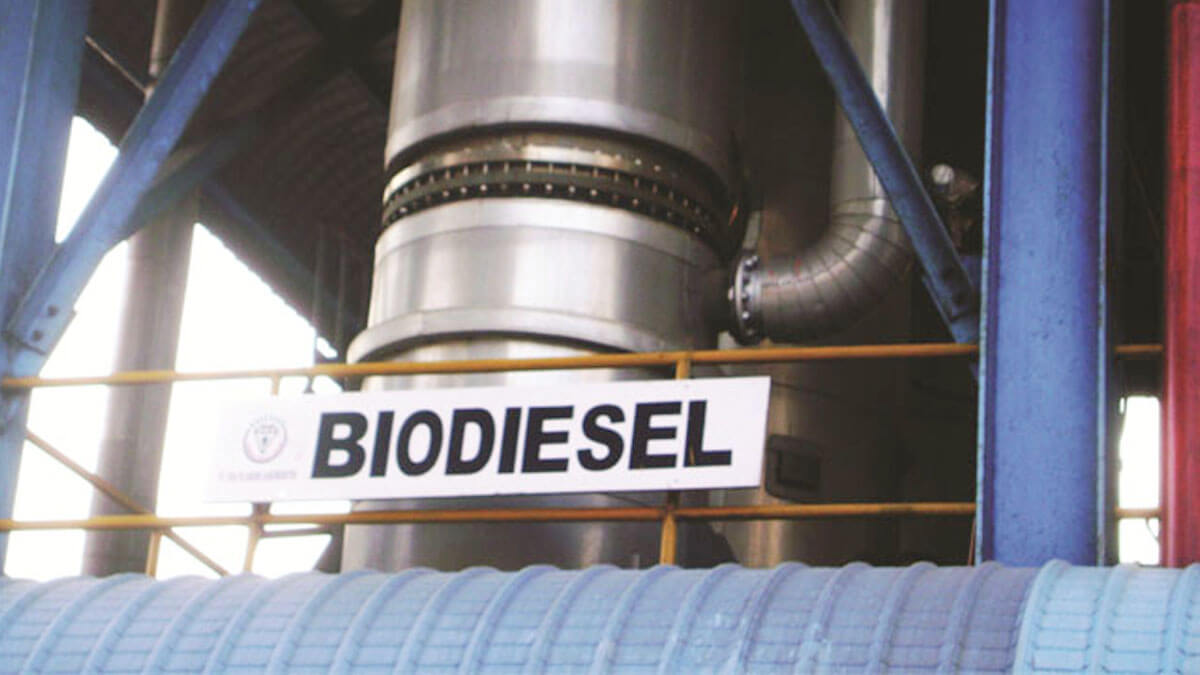
Amidst long-standing debates over the future of the palm oil industry and the energy transition, recent scientific findings from the Bogor Agricultural University (IPB) provide a crucial perspective. A doctoral dissertation by Gusti Artama Gultom, defended on December 22, 2025, demonstrates that biodiesel is not merely a green energy policy, but a vital economic instrument that determines the welfare of millions of farmers and the stability of national palm oil prices.
For Indonesia, biodiesel serves as a “bridge” connecting economic sovereignty at the upstream level with environmental commitments on a global scale. It is time to recognize that biodiesel is the key to achieving the Net Zero Emission (NZE) 2060 target without sacrificing the livelihoods of smallholder farmers.
Biodiesel as an Economic Shield for Farmers
For too long, biodiesel has been viewed only through the lens of engine mechanics or emissions. However, Gusti Gultom’s research, utilizing the Vector Error Correction Model (VECM) econometric approach, provides scientific proof that domestic biodiesel policy has a significant positive impact on international Crude Palm Oil (CPO) prices.
As the world’s largest producer, Indonesia’s policy of absorbing CPO for biodiesel automatically reduces global export supply, which in turn drives up international prices. This domino effect is most deeply felt by smallholder farmers; increased biodiesel production is proven to raise the price of Fresh Fruit Bunches (FFB). Biodiesel acts as a shock absorber; when global prices plummet, domestic demand for biodiesel ensures that farmer incomes do not collapse. This is the tangible form of economic sovereignty that sides with the people.
A Global Leader in Plant-Based Energy Transition
When looking at the global map, Indonesia stands tall as a leader. Indonesia has proven it can exceed world standards. Data from the Ministry of Energy and Mineral Resources (ESDM) in 2025 recorded that biodiesel use successfully suppressed greenhouse gas emissions by 32.2 million tons of CO2 equivalent. These are not just numbers; they are concrete proof of Indonesia’s contribution to cooling the planet.
[Image comparing the carbon cycle of fossil diesel versus palm-based biodiesel]
The 2045 Challenge: Avoiding the Food vs. Energy Conflict
Despite this optimism, we must remain vigilant. The IPB research also provides an early warning. By 2045, CPO production is projected to reach 60 million tons, while domestic demand (for both food and biodiesel) is estimated to hit 50 million tons. If land productivity is not increased now, the risk of a clash between energy needs and food security will become a reality.
Therefore, biodiesel policy cannot stand alone. It must be integrated with the Smallholder Palm Oil Replanting (PSR) Program and improvements in mill extraction rates. We must produce more from existing land rather than clearing new areas.
A Call to Action for the Younger Generation
As the owners of the future, Indonesia’s youth must take an active role in guarding this transition:
-
Support Upstream Innovation: Join agricultural research to boost smallholder productivity so the 2045 challenges can be overcome.
-
Counter Negative Stigma: Use scientific data (such as this IPB dissertation) to educate the public that palm biodiesel is a strategic solution, not an environmental enemy.
-
Monitor Sustainable Policies: Ensure the government maintains transparency in fund distribution so that benefits reach the hands of small farmers, not just large-scale industries.
Biodiesel is living proof of national sovereignty. It is an instrument that saved Rp 139 trillion in foreign exchange, absorbed 1.9 million workers, and keeps our skies blue. With the support of all elements of the nation, especially the youth, biodiesel will lead Indonesia toward energy independence and NZE 2060 with strong economic dignity.