


Government Sets 15.65 Million Kiloliters Biodiesel Allocation for 2026


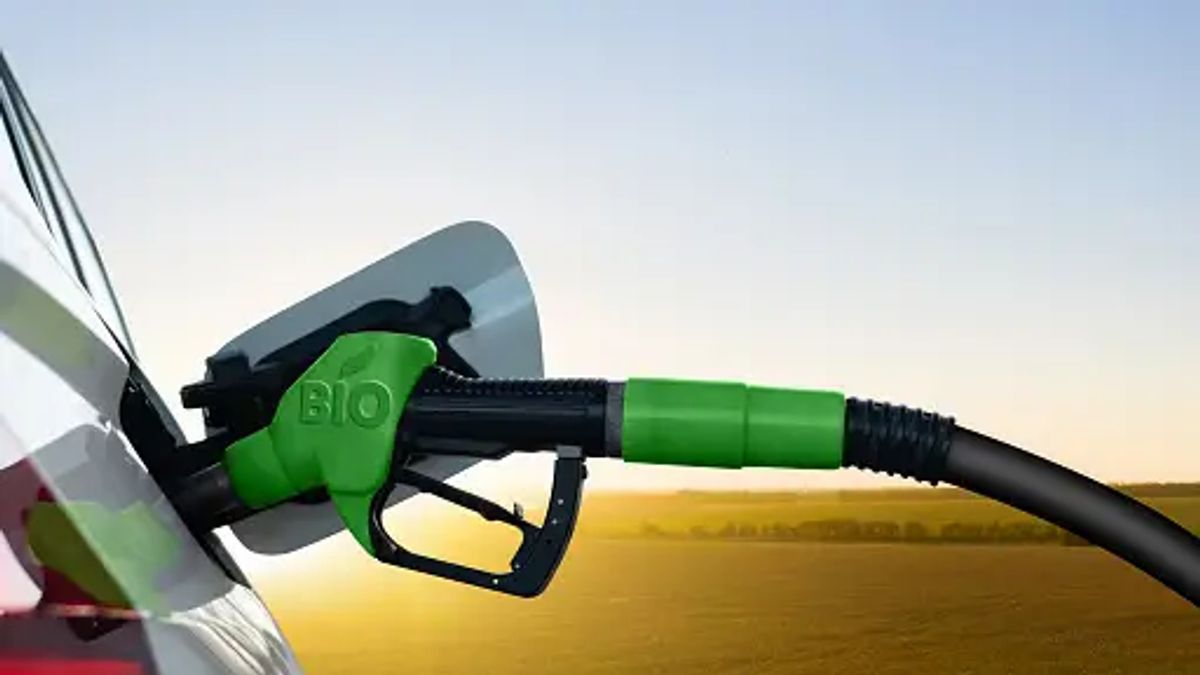
The Indonesian government has reaffirmed its commitment to accelerating the green energy transition by announcing a massive allocation for biofuels. As 2025 draws to a close, the Ministry of Energy and Mineral Resources (ESDM) has officially set the biodiesel volume allocation for 2026 at 15.65 million kiloliters (kL). This move is part of the government’s strategic roadmap to strengthen national energy security and reduce vulnerability to global oil market fluctuations.
This policy was enacted through Minister of Energy and Mineral Resources Decree Number 439.K/EK.01/MEM.E/2025. The regulation not only establishes the volume but also governs the involvement of various Fuel Business Entities (BU BBM) and Biofuel Business Entities (BU BBN), which will drive the blending of diesel fuel with biodiesel throughout 2026.
Volume Distribution: Balancing PSO and Non-PSO Sectors
Eniya Listyani, Director General of New, Renewable Energy, and Energy Conservation (EBTKE), detailed that the 15.65 million kL allocation is divided into two primary distribution schemes to ensure fair access and industrial efficiency:
-
Public Service Obligation (PSO) Sector: Allocated 7,454,600 kL. This sector covers the needs of public transportation and subsidized communities, ensuring that access to clean energy remains affordable for the general public.
-
Non-PSO Sector: Allocated 8,191,772 kL. This sector is designated for industrial, mining, and commercial transportation needs operating in the open market.
The success of this target will be supported by a massive synergy between 32 fuel business entities and 26 biofuel business entities. This cross-industry synergy is expected to create a resilient supply chain, from the availability of Crude Palm Oil (CPO) to the distribution of the final product at delivery points.
Economic Impact: Fantastic Foreign Exchange Savings
One of the primary highlights of the 2026 biodiesel policy is its significant macroeconomic impact. Amid government efforts to balance the trade deficit, the biodiesel program has emerged as a fiscal lifesaver. According to ESDM Ministry calculations, the implementation of biodiesel in 2026 is projected to save Rp 139 trillion in foreign exchange from diesel imports.
This figure represents more than just a statistic; it is a representation of economic sovereignty. By reducing fossil diesel imports, Indonesia can redirect these funds toward infrastructure development or social programs. Additionally, the program creates an estimated Rp 21.8 trillion in added value for the domestic palm oil industry.
Furthermore, the human side of this program is evident in its labor absorption. Projections show that the end-to-end biodiesel industry chain will be able to employ over 1.9 million workers, ranging from palm oil farmers and processing plant workers to logistics personnel.
Concrete Contribution to the Environment and NZE Targets
Beyond economic benefits, biodiesel remains Indonesia’s primary instrument in combating the climate crisis. The 2026 implementation target is expected to reduce greenhouse gas emissions by 41.5 million tons of CO2 equivalent. This massive emission reduction is crucial for Indonesia to meet its commitments under the Paris Agreement and achieve the Net Zero Emission (NZE) target by 2060.
The use of 40 percent biodiesel (B40) is the main focus to ensure this transition runs effectively. By increasing the bio-content in the fuel blend, Indonesia is gradually releasing its dependence on dirty fossil energy and shifting toward cleaner, more sustainable energy sources.
Strict Governance and Oversight
Recognizing the large volumes and economic value involved, the government guarantees that the governance of the biodiesel program will be tightened. Eniya Listyani emphasized that oversight will be conducted in layers, including:
-
Performance-Based Allocation: Allocations are granted to business entities based on production capacity and performance track records.
-
Quality Monitoring: Ensuring the quality of biodiesel reaching the public’s vehicle engines meets high technical standards to prevent engine damage.
-
Independent Verification: Involving independent surveyors to verify volume and quality at every distribution delivery point.
The government also maintains flexibility; while the allocation is set, the regulation allows for adjustments should there be changes in national energy needs or other strategic policy dynamics. With these measured steps, Indonesia is optimistic that 2026 will be a new milestone in the nation’s journey toward green energy independence.